
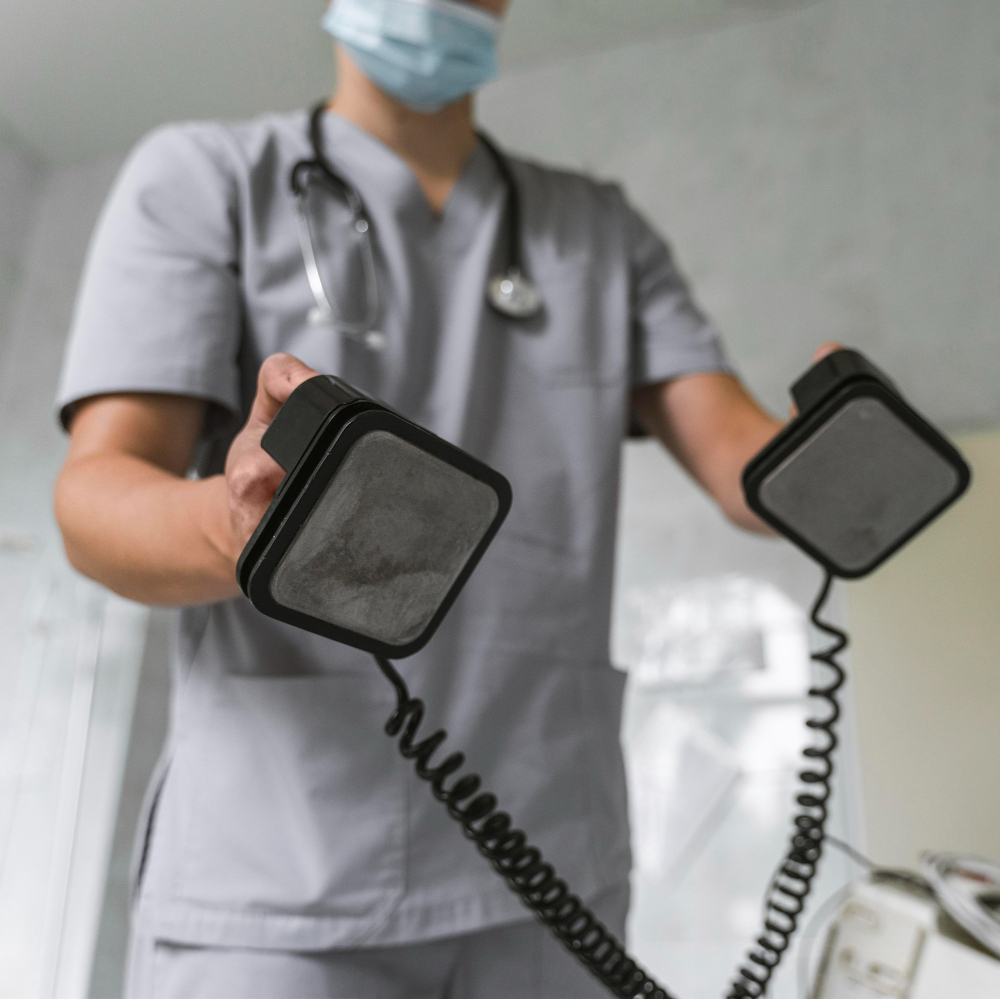
Introduction
Defibrillation is a life-saving treatment for people with certain heart problems. It uses a device called a defibrillator to send an electric shock to the heart. This shock can help restore a normal heartbeat. Because defibrillation is often used during sudden cardiac arrest, it can save lives. Many people have seen defibrillators in public places, but few know how they work. In this blog, you will learn what defibrillation is, how it works, and when it is needed. Understanding this process can help you act quickly in an emergency.
What Is Defibrillation?
Defibrillation is a medical procedure that delivers a controlled electric shock to the heart. This shock helps stop dangerous heart rhythms, such as ventricular fibrillation or pulseless ventricular tachycardia. These rhythms can cause the heart to stop pumping blood. As a result, defibrillation is often used in emergencies. The goal is to restart the heart’s normal rhythm and restore blood flow to the body. According to the American Heart Association, quick defibrillation can double or triple the chances of survival after sudden cardiac arrest.
When Is Defibrillation Needed?
Defibrillation is needed when the heart beats in a very abnormal way. Most often, it is used during sudden cardiac arrest. In this condition, the heart stops beating effectively. Some common situations where defibrillation is needed include:
Sometimes, doctors may use defibrillation in a hospital for other serious heart rhythm problems. However, it is not used for every type of heart issue. For example, it does not help with a heart attack unless the person’s heart stops or beats abnormally.
How Does Defibrillation Work?
Defibrillation works by sending a strong, quick electric shock to the heart. This shock stops the abnormal rhythm. After the shock, the heart’s natural pacemaker can restart a normal beat. The process is simple but powerful. Here’s how it usually happens:
Because the shock is quick, it does not harm the heart muscle. In fact, the sooner defibrillation is given, the better the outcome.
Types of Defibrillators
There are several types of defibrillators. Each type has a special use. Knowing the differences can help you understand when and how they are used.
What to Expect During Defibrillation
During defibrillation, the person may be unconscious. If you are helping, you should follow these steps:
After the shock, the person may wake up or remain unconscious. Medical help is still needed. In a hospital, doctors may use medication or other treatments after defibrillation.
Safety and Risks
Defibrillation is generally safe, especially when used in emergencies. However, there are some risks. For example, the shock can cause minor burns or skin redness where the pads touch the skin. Rarely, it may cause other heart rhythm problems. But, the benefits far outweigh the risks when someone’s life is at stake. AEDs are designed to be safe for the public to use. They will not deliver a shock unless it is needed. According to the CDC, using an AED within minutes can greatly improve survival rates.
Prevention and Lifestyle Guidance
While defibrillation can save lives, it is best to prevent heart problems before they start. You can lower your risk of sudden cardiac arrest by:
For people with known heart disease, following your doctor’s advice is very important. In some cases, your doctor may suggest a wearable or implantable defibrillator for extra protection.
Frequently Asked Questions
If you have questions about defibrillation, consult a cardiologist for personalized advice.